words
Rhyme Time
Find the word that sounds the same at the end
Name Pibbit's feeling, then help him calm down
Free to play · No ads · No sign-up
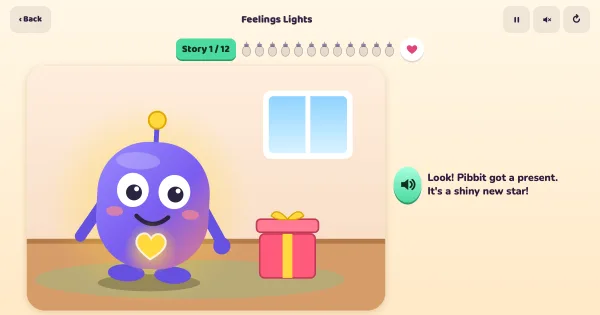
Pibbit the robot has a light on his tummy that changes with his mood: red and fizzy when he's angry, a dripping blue when he's sad. In twelve little stories his balloon floats away, Pip grabs his ball, his tower falls down twice, and a surprise party jumps out at him. Your child picks the face that matches how he feels, and every face says its name out loud. For a big feeling they then help him with it, by holding a balloon to breathe slowly, squeezing a squishy ball, counting fingers to five or giving him a long hug, and they watch his light settle into a calm green. In the later stories Pibbit has his back turned, so they have to work out his feeling from what happened.
Feelings Lights is one of our free memory & attention games for kids — play it right here in your browser, or browse all our free online games.
Feelings Lights covers two things preschool teachers work on together: having a word for a feeling, and having something to do with it. Each story asks the child to name how Pibbit feels, and the word list goes past happy and sad to frustrated, worried and proud, which are the ones children feel all the time and rarely have names for. The faces are spoken aloud, so no reading is needed.
The second half is practice, not explanation. When Pibbit is angry or scared, the child chooses a strategy and actually does it with him: four slow breaths with a balloon that fills while they hold it, a squishy ball, counting fingers to five, or a long hug. Research on the Daniel Tiger feelings app found that children who played it were more likely to take a breath and count when they were upset, and this game rehearses the same small routines. After he calms down, Pibbit often uses his words too ("Pip, can I have my ball back, please?"), which shows what comes after the calming.
Made for ages 3 to 6. Three-year-olds can play the first stories, where Pibbit's face shows the feeling plainly and there are only two faces to choose from. Four- and five-year-olds get more from the back-turned stories, where they have to think about what happened. A six-year-old will breeze through the naming but still likes the breathing balloon and telling Pibbit how they feel.
Name your own feelings out loud this week: "I'm frustrated, this jar won't open." Children learn the words from hearing them used.
Pick one calm-down tool your child liked and practise it when they're calm, so it's familiar when they're not.
Don't use the game in the middle of a meltdown. It works as practice beforehand, not as a fix during.
Yes — Feelings Lights is completely free to play here in your browser. There's no sign-up, no download and nothing to buy.
Tap faces and helpers. Hold your finger on the balloon while you breathe in and let go to breathe out; press the squishy ball; tap the fingers one at a time; hold your finger on Pibbit to hug him. Press Play and listen to the story. Tap the green speaker to hear any line again.
No. Feelings Lights runs in any web browser on a phone, tablet or computer — just open the page and play. Nothing installs.
Feelings Lights is made for ages 3 to 8. It helps children practise naming nine feelings, including frustrated, worried and proud and working out a feeling from what happened, not only from a face while they play.
Find the word that sounds the same at the end
Which picture starts with this letter?
Find the face that matches the feeling
Listen to the little robot and do what he asks
Flip the cards and find every matching pair!
Watch, listen, and repeat the color pattern!
Math, reading, spelling, flashcards and coloring pages — all free in our Learning Center.